“According to our interlocutors, the laundry sector should have a stronger presence at the major trade fairs dedicated to tourism and hospitality. Today, these events are attended mainly by machinery and textile manufacturers, while the presence of laundries - an essential link in the hospitality supply chain - is less evident. The issue also concerns quality certification. A recognisable brand based on clearly defined standards could make the value of the service immediately apparent to the end customer. An example is the denominations used in other sectors, where a brand has become synonymous over time with specific quality characteristics.”
The goal, therefore, would be to turn the quality of laundry service into a recognizable element for the consume, as well. Achieving this inevitably requires a marketing strategy capable of of giving visibility to work that often stays behind the scenes. “A recent episode shows how this value can reach the end user directly. A guest who stayed at an important hotel in Franciacorta, after appreciating the linen used during the stay, traced the company through the label on the product and asked to purchase the same linen for his home. A significant recognition, because it demonstrates that quality can be perceived even outside the direct relationship between laundry and hospitality establishment.”
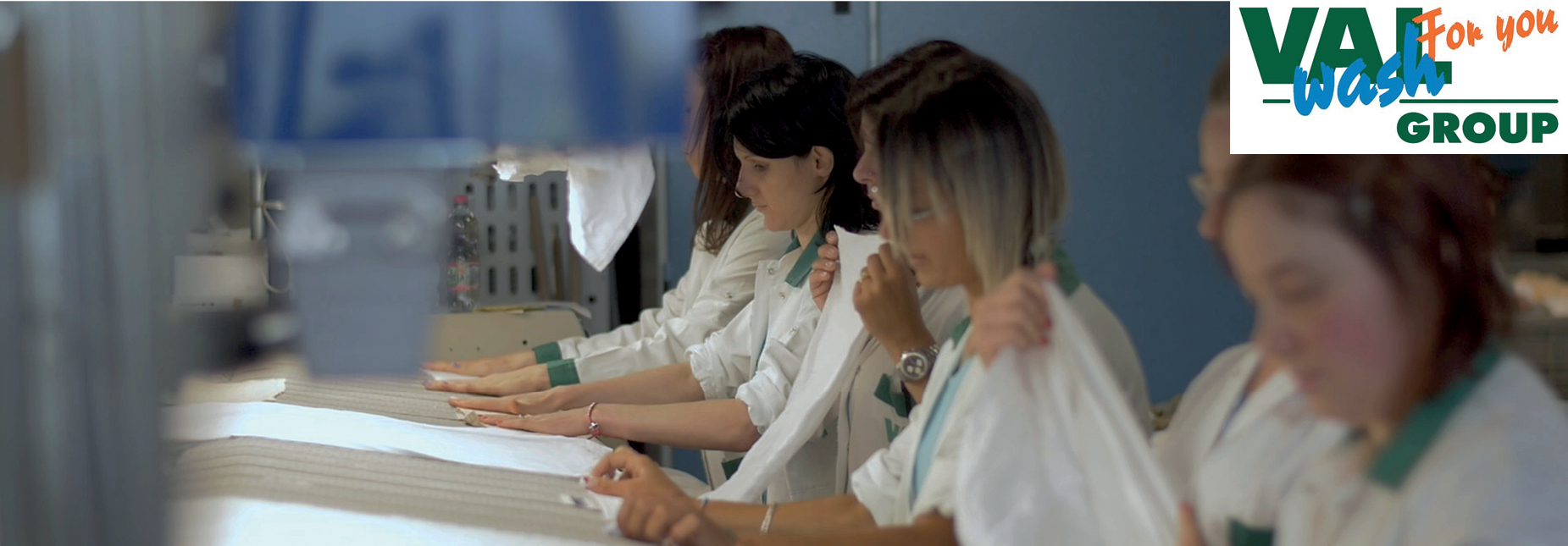
The business model focuses primarily on the rental, washing and linen supply, with 98% of turnover linked to the rental service. “Choosing to prioritise linen supplied directly by the laundry reduces problems related to the management of client owned items, such as damage, loss, or disputes.”
“Our main target market is the hotels and restaurants sector. Hotels account for approximately 70–75% of our overall volume, while the remaining share comes from catering, including in-house hotel restaurants. One of the distinguishing features of our offering is the high degree of customisation we can provide. Each customer can choose fabrics, weights, finishes and details, with numerous variations available for the same item. In the case of pillowcases, for example, there are around 80 different options, varying in fabric, edging, colour, and features. This approach allows us to “dress” each establishment according to its specific needs, avoiding standardised products. Customisation therefore also becomes a competitive tool, enabling us to offer a differentiated offering at market consistent prices.”
“Our commercial network covers an extensive territory, including strategic tourist areas across northern Italy. From the main headquarters, we serve Lake Como, Lake Iseo, Lake Garda, Val di Sole, Val di Non and Val Camonica. Other facilities cover the Varese area, Lake Maggiore, Milan and its province, while the Tirano facility serves Valtellina, from Livigno to Lake Como, and even parts of Switzerland.
Such an extensive network makes logistics one of our most significant cost items. Transportation accounts for approximately 13–14% of the budget of the Temù facility. The activity is managed internally through a group transport company, that operates a fleet of around 35 trucks. Distances and the geographical characteristics of the areas we serve are critical variables. In some zones multiple trips can be made in a single day; on routes to the large lakes, where distances and road conditions are more complex, the organization must be especially efficient.”
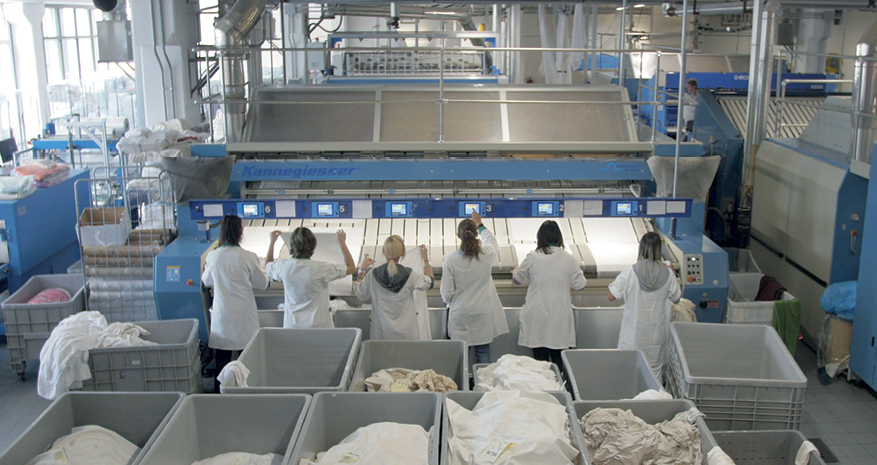
 “Recruitment difficulties focus on two specific profiles: C license drivers and maintenance technicians. Positions are currently filled, but finding qualified personnel remains problematic. The high level of automation introduced in recent years, on the other hand, has reduced the need for specialised skills in certain operational tasks. Automated production lines simplify many activities and also facilitate the recruitment of workers with different professional backgrounds.”
Have you made any significant investments in your business recently?
“Technological investments have mainly targeted material handling and linen introduction, especially for large items, as well as ironing lines. The company collaborates with specialised suppliers to further automate processes, including sorting and grading, a stage where AI could also play a significant role. We have a more cautious approach regarding the RFID technology for linen. The decision hinges on a cost benefit analysis: the tag cost is a notable expense, and to achieve truly effective management the system would need to be applied to the entire linen fleet. To monitor losses, we use a contractual system that provides for a percentage allowance for missing items, complemented by periodic inventories carried out together with the customer.”

Which are the main market demands?
“After years in which competition focused primarily on price, the market shows now a greater attention to the quality of linen and service, even with a willingness to pay higher prices. For an industrial laundry, however, quality also means reliability. Timely deliveries are central to the client relationship, especially in territories with complex weather and road conditions. Even in exceptional circumstances, the goal is to maintain the service. During a recent landslide that disrupted road access in the serviced areas, deliveries were guaranteed through extraordinary organisational measures and, where necessary, by accepting higher transport costs.”
How do you define quality within the company?
“Quality starts well before the washing process. The company has developed its own line of towels and linen and has a dedicated technical specialist responsible for fabric selection. Materials are chosen not only for their aesthetic qualities but also for their compatibility with washing processes and their durability. Linen represents one of the main cost items, accounting for around 18-20%, while personnel costs account for approximately 30%. Our customer portfolio includes businesses of very different sizes, ranging from hostels and small accommodation facilities to large hotels. The “batch-based” approach - the ability to process linen according to each customer’s specific needs - allows us to maintain this flexibility.”
“Despite our strong reliance on technology, the human factor remains one of our key strengths. All the partners are actively involved in the companies, and the direct involvement of the owners is a structural characteristic of the group. This is complemented by low staff turnover and an internal careerdevelopment path that, over the years, has involved several partners and employees. A new generation of the family is now also becoming involved, with the children joining the business. The recent decision to move towards a merger of the companies also stems from the desire to consolidate the structure and build a long-term perspective.”