/ Magazine / Other Articles / MARKETING AND AI: THE NEW DRIVING FORCE BEHIND LAUNDRY INDUSTRY RECOVERY
by
ALESSANDRO MARTEMUCCI
Lean Marketing Manager
FROM TOOLS TO CASE STUDIES: SIMPLIFYING AND REINVENTING BUSINESS MODELS IN THE LAUNDRY SECTOR
The laundry industry, spanning both industrial and retail sectors, is undergoing a major transformation. Rising competitive pressures and shifting consumer habits are driving the need for new strategies, while emerging technologies such as artificial intelligence offer powerful tools for rethinking traditional business models. This evolution extends far beyond small family-run laundries, encompassing the entire value chain - from machinery manufacturers and chemical suppliers to software developers, self-service laundry chains, and linen rental operators. For all of these players, the integration of marketing and AI represents a path toward greater efficiency, sustainability, and customer responsiveness.
The demand for laundry services is evolving. Modern consumers now expect speed, efficiency, traceability, sustainability, and transparency, while businesses - from hotels and restaurants to the healthcare sector - prioritize consistent quality, energy efficiency, and cost reduction. In this context, data-driven marketing strategies and artificial intelligence offer the sector new opportunities: to communicate more effectively, better serve diverse customer segments, and deliver services with tangible added value.
Artificial intelligence: driving innovation along the entire supply chain
AI-powered marketing extends far beyond neighbourhood laundries, it touches the entire industry ecosystem. Here are some practical examples where AI has become the core of a more competitive business model.
Machinery manufacturers
Thanks to the Internet of Things, connected machinery collect valuable data that can be leveraged for both marketing and supply chain insights. This information enables optimization of supply flows as well as predictive maintenance, allowing companies to anticipate malfunctions and schedule targeted technical interventions. In this way, products become “enhanced”, continuously communicating with manufacturers and providing realtime data on their actual usage. Several multinational companies in the sector have already implemented AI-driven systems to transform sales into ongoing relationships with industrial customers.
Distributors
For distributors of products and equipment, AI integration with business management systems has opened the door to advanced automation. Companies can now segment customers more precisely (whether small laundries, industrial laundries, or other clients) deliver targeted offers through intelligent newsletters or e-commerce platforms, and even monitor machine performance remotely to provide predictive maintenance contracts. In this way, data is transformed into real added value for customers.
Self-service laundry chains
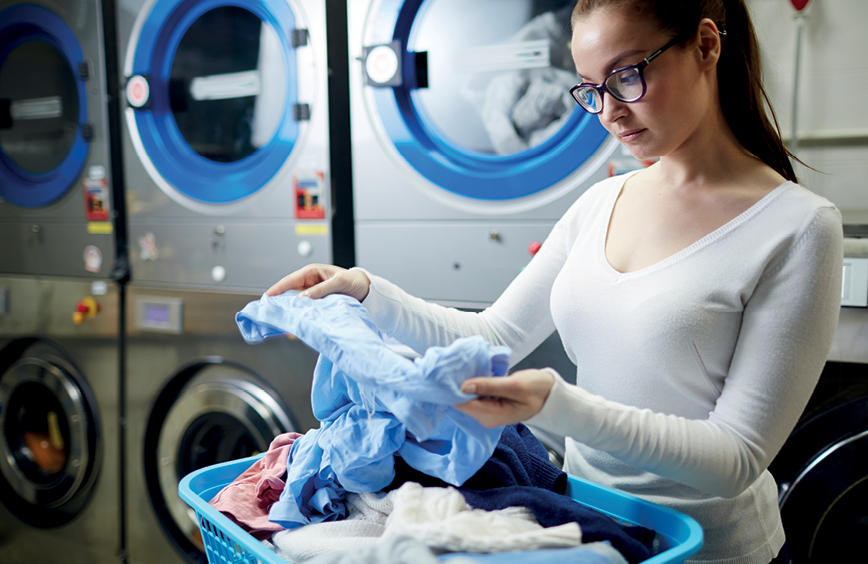
Self-service laundry networks are leveraging AI tools to analyse usage patterns and send personalized push notifications. For instance, apps can suggest the least crowded times for customers to visit or promote special offers during specific time slots, resulting in better load distribution and increased revenue per machine. Simultaneously, customer analytics platforms track user behaviour, providing insights into visit frequency, service preferences, and price sensitivity. These insights enable the implementation of dynamic pricing models, where rates can adjust based on seasonality or facility occupancy.

Energy efficiency and logistics
Another focus area is energy optimization. Intelligent systems regulate washing cycles to reduce water and energy consumption, delivering both economic and environmental benefits. Similarly, smart warehouse solutions are revolutionizing linen rental for hotels and restaurants. For example, one company in the sector uses machine learning algorithms to forecast demand based on tourist seasons, optimizing logistics and delivery times.
Benefits for the entire ecosystem
The adoption of AI brings advantages to the entire laundry sector, not just to individual laundries: • Greater efficiency: streamlined processes and reduced operational costs.
• Sustainability: lower energy and water consumption, which can also be leveraged as a marketing asset.
• Customer loyalty: enhanced satisfaction through personalized services and smoother user experiences.
• New business models: from pay-per-use and subscriptionbased rentals to digital services integrated with online platforms
Where to start? Marketing and AI tips for the laundry industry
Shifting consumer habits, the rise of on-demand services, and the effects of the pandemic have pushed many businesses to rethink their consumption and marketing models. Traditional communication tools such as word of mouth, flyers, and posters remain relevant, but they are no longer sufficient. Today, the customer journey often begins on a smartphone. In this context, the integration of marketing and artificial intelligence emerges as a strategic resource, bringing new energy to the sector. These tools allow businesses to reach and retain customers more effectively with targeted, datadriven strategies. The benefits are tangible: time savings in management and communication, stronger customer relationships through faster and more personalized service, higher margins thanks to innovative services and improved cost efficiency, and market differentiation. The laundry is no longer just a place to wash clothes, it becomes a smart business designed to meet modern needs.
Even neighbourhood laundries are tapping into the potential of geolocated advertising campaigns. With tools such as Google Ads and Meta Ads, businesses can precisely target people living just a few hundred meters away. With relatively small investments, AI algorithms analyse user interests and ensure that the right Ad reaches the right person. For example, someone searching online for “carpet cleaning Milan” or “laundry open Sunday Rome” can immediately receive the most relevant local offer. Compared to traditional flyers or billboards, this marks a radical shift: today’s customers are more informed, rely on smartphones to choose services, and expect quick responses. The result is less waste and a genuinely interested customer base.
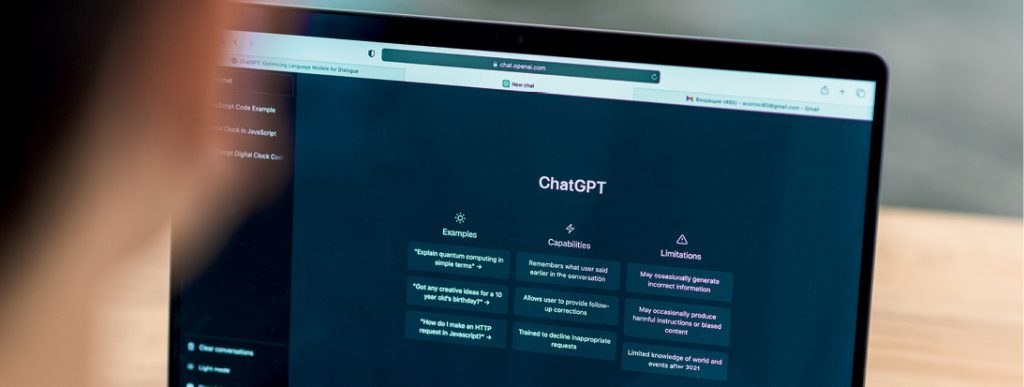
Artificial intelligence is also transforming seasonal campaigns. With automation tools, and even with the support of systems like ChatGPT, customer data stored in Excel files can be profiled in seconds, enabling highly targeted communications delivered just at the right moment. Examples include promotions on duvets before winter, offers for delicate garments after the holiday season, or special packages for university students returning to the city. In this way, marketing becomes smarter and timelier, transforming itself from a simple advertising expense to a powerful tool for building relationships and customer loyalty.
Customer communication remains a cornerstone of success in the laundry sector. Increasingly, businesses are turning to chatbots integrated with platforms such as WhatsApp and Messenger - AIpowered tools capable of answering frequently asked questions, managing bookings, and sending automatic reminders in real time. A noteworthy example comes from Turin, where a laundry implemented a WhatsApp Business chatbot to notify customers as soon as their garments were ready for pickup. The initiative, launched at no cost, resulted in a 40% drop in phone calls and a marked increase in customer satisfaction, as clients received timely updates without the need to wait. These cases demonstrate how adopting digital and AI-driven solutions can help make traditional services more efficient while significantly enhancing the overall user experience.
Smart customer loyalty
One of the key advantages of artificial intelligence is its ability to analyse and leverage customer data. Even a small laundry can use advanced management software to create detailed digital profiles, identifying who regularly brings in shirts, who prefers ironing, and who requests dry-cleaning or special treatments. Based on these insights, the system acts as a personalized marketing consultant, suggesting targeted and relevant offers. For example, a customer who regularly brings in five shirts per week could be offered a monthly subscription at an attractive price. A family that uses the service seasonally, for duvets or curtains, might receive a timely reminder along with a special discount. The result is marketing that is both less intrusive and more relevant. By responding to actual customer needs rather than generic promotions, laundries can create real value for clients while strengthening their own business. In this way, the laundry becomes more than a service provider, it builds lasting relationships based on trust and continuity with its customers.
The rise of fresh, incisive communication
Artificial intelligence tools such as Gemini, ChatGPT, and Copilot are reshaping how businesses engage with their audiences. These platforms provide marketers with a wellspring of inspiration, offering original ideas, compelling slogans, and personalized messages tailored to diverse customer segments and communication channels. Beyond accelerating the brainstorming process, AI enables brands to explore new modes of expression, crafting campaigns that are both persuasive and authentic. Within minutes, companies can generate innovative strategies and attention-capturing content designed to foster stronger connections with their audiences. By making creativity more accessible, agile, and strategic, AI is opening up a space that was once reserved only for large marketing and communication teams, unlocking fresh opportunities for organizations of all sizes.
Home pick-up and delivery services have been part of the laundry industry for some time, but artificial intelligence is taking the model to a new level making it more efficient, sustainable, and customer-focused. Modern logistics platforms now incorporate algorithms that calculate optimal delivery routes, factoring in traffic conditions, building operating hours, and even individual customer preferences. The result: precise scheduling, reduced fuel consumption, and minimized wasted time. A practical example comes from a laundry business in Bologna, which leveraged such AI-driven systems to cut transport costs by 20% while significantly improving delivery punctuality. Innovation extends beyond logistics. So called smart subscriptions are emerging, powered by machine learning that analyses customer consumption patterns. These systems allow businesses to offer highly tailored packages: weekly washes for regular users, family solutions for larger households, and specialized business solutions for professional or corporate clients. By combining AIdriven logistics with personalized subscription models, laundries are evolving into reliable partners, anticipating customer needs, enhancing convenience, and building long-lasting relationship of trust with customers.
Mirroring strategies long used by the airlines, professional laundries are increasingly leveraging artificial intelligence to implement dynamic pricing models. These systems enable operators to adjust rates based on demand, offering incentives such as discounts on less busy days to better balance workloads. In Florence, for instance, a laundry identified Wednesday as a low-demand day and launched a targeted AI-driven promotion. The result was a 15% increase in items processed, achieved without impacting profit margins. The advantages of artificial intelligence extend far beyond price management. Advanced software can monitor washing cycles, recommend the most energy-efficient times for operation, and minimize water consumption. These innovations deliver tangible economic benefits for businesses while also promoting environmental responsibility, a factor increasingly valued by customers who prioritize sustainability.
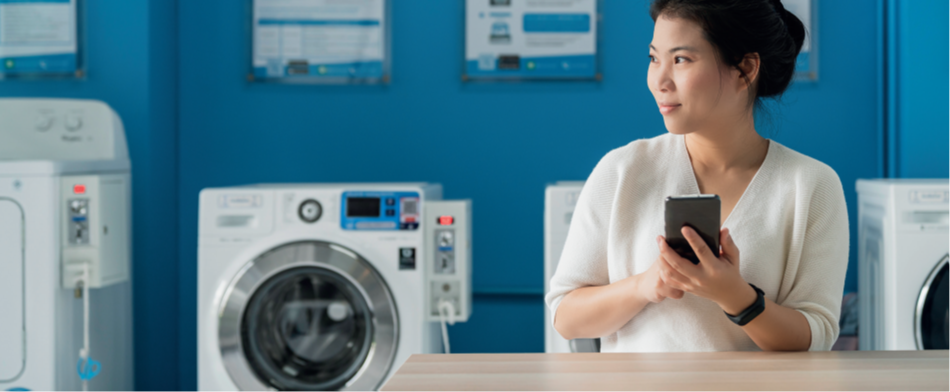
Artificial intelligence is enabling even small, neighbourhood laundries to evolve into fully-fledged brands. Success is no longer defined solely by the quality of the service but by the management of the customer experience at every stage - from the first online interaction to the return of freshly laundered garments. Innovative applications illustrate the possibilities:
• personalized thank-you messages sent automatically after each wash;
• platforms that allow customers to track the status of their items – “washing,” “ironing,” or “ready for pickup” – similar to parcel delivery services;
• apps that calculate the environmental impact saved through low-consumption washes.
These AI-driven features, increasingly accessible to small businesses, elevate the laundry from a routine service to a modern, thoughtful, and sustainable experience, meeting the expectations of today’s conscientious consumers.
New frontiers in creativity
Intuitive platforms like Canva, and the latest innovations such as Nano Banana, are redefining the boundaries of creativity and communication. Today, ideas can be brought to life quickly, easily, and with accessibility to everyone. With just a few clicks and minimal investment, users can generate striking images, original graphics, and visual content that amplify creative expression. What once required significant time, technical skills, and financial resources can now materialize almost instantly. Nano Banana, in particular, represents a new era of automated creativity. More than just a tool, it serves as a creative ally, transforming concepts into engaging visual content and making communication more immediate, emotional, and impactful.
Challenges ahead for AI in the laundry sector
The adoption of artificial intelligence in the laundry industry has its own obstacles. Many business owners worry that integrating new technologies will demand substantial investment or technical expertise that may be difficult to acquire. Yet, a growing range of accessible solutions - both free, although with limited features, and subscription-based, allow businesses to start small and grow gradually. Beyond technical and financial concerns, the biggest barrier is often cultural. Shifting away from the mindset of “we’ve always done it this way” requires embracing innovation as a process of experimentation and incremental improvement. Experts recommend beginning with a single AI tool - whether it’s an app for content creation, a chatbot for customer service, or an internal management platform. As familiarity grows, it will be easier to gradually extend the use of AI applications into marketing, logistics, and operational processes, paving a sustainable path towards full digitalization. •
DETERGO MAGAZINE # OCTOBER 2025
Share
Do you want to become one of us?
Do you know the association?
In 1990 was founded the Association ASSOFORNITORI. In 2022 the name has been changed to ASSOCIAZIONE ITALIANA FORNITORI LAVANDERIE (ITALIAN ASSOCIATION OF LAUNDRY SUPPLIERS), with the acronym AIFL.
Become a Member
Phone: 02 39 31 41 20
Email: info@assofornitori.com
C.F. 97091250155
Via Aldo Moro 45
20060 Gessate (MI)
detergo
Associated Companies
Phone: 02 39 31 41 20
Email: info@assofornitori.com
C.F. 97091250155
Via Aldo Moro 45
20060 Gessate (MI)
Follow us