

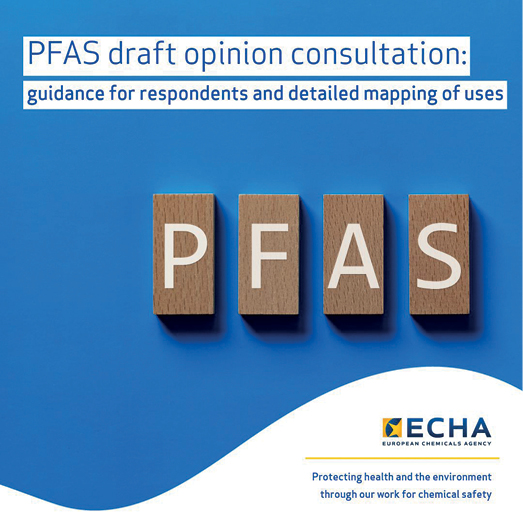
The European Chemicals Agency (ECHA) has released new guidelines and a comprehensive overview of PFAS applications, paving the way for public consultation on the SEAC’s draft opinion on restrictions for these substances. The documents set out the structure and content of the stakeholder questionnaires, including a sector-specific study covering 14 industries and focusing on uses, volumes, and socioeconomic impacts, as well as a general survey applicable across all sectors and aligned with the main sections of the SEAC assessment.
The public consultation, based on the anticipated draft opinion, is scheduled to run for 60 days in the first quarter of 2026. In the meantime, ETSA, ESF, FESI, and EURATEX have prepared a questionnaire to collect input from companies, aiming to identify operational challenges and potential unintended consequences of the proposed restrictions.
ETSA represented the sector at a DG GROW session on the role of Responsible Business Conduct (RBC) in public procurement. The discussion highlighted the practical and legal challenges companies face and underscored the importance of ensuring that RBC objectives are really applicable in public tenders, ETSA has informed the European Commission on notable corporate best practices and key legislative measures presented by Assosistema, underlining Italy’s leading role in Green Public Procurement, particularly in promoting reusable textiles as a sustainable alternative to single-use products.

ETSA emphasized that integrating RBC into public procurement is crucial for ensuring policy coherence and alignment with international standards, while highlighting the need for structured dialogue with businesses and civil society. In her remarks, Elena Lai pointed to the environmental benefits of textile rental and circular economy models, advocating for mandatory tender criteria that recognize environmental, social, and innovation factors, including alternative approaches to direct purchasing, such as leasing. Concrete examples, such as the use of reusable surgical textiles instead of single-use alternatives, illustrate how sustainabilityoriented tender criteria can reduce emissions and waste, supporting more efficient resource use in public procurement.

Digital product passport: updates from the CIRPASS-2 project ETSA continues its active involvement in the European CIRPASS-2 project on the Digital Product Passport (DPP). The most recent Work Package 5 meeting brought together around 50 representatives from different sectors, underscoring the cross-cutting relevance of the initiative. Key updates included the announcement of DPP Day, scheduled for 19 March in Rotterdam as part of the Data Sharing Festival, and the launch of targeted interviews with WP5 industry participants to gather feedback on the DPP’s functional requirements and operational challenges. Contributions will be collected on an anonymous basis and fed into the European standardisation process.
During the meeting, EURATEX presented the new Textile DPP, outlining both opportunities and critical challenges, particularly for small and medium-sized enterprises. Requirements for the textile-specific DPP are expected by early 2026, with entry into force planned for mid-2027. •
DETERGO MAGAZINE # JANUARY 2026


