

/ Magazine / Other Articles / Industrial laundries go Hi-Tech: data, incentives, and future challenges

Industrial laundries go Hi-Tech: data, incentives, and future challenges

by
MARZIO NAVA

Interview with Marcello Marconi Industrial engineer and expert in 4.0 Industry, 5.0 Transition and hyper-depreciation


1 INTERVISTA DETERGO_APRILE_2026

Let’s start with hyper-depreciation and interconnection. How central is this requirement, especially for industrial laundries?

“Interconnection has always been a cornerstone of 4.0 Industry measures, from hyper-depreciation to tax credits, and now in the form of income deductions. In practice, the concept has remained unchanged over the past decade: what truly matters is the ability to leverage data. While the regulation was originally designed for traditional manufacturing, it applies perfectly to industrial laundries, which are, in effect, highly automated factories. In this sector, data is crucial because everything is volume driven: the more processes are analyzed, the greater the opportunities for optimization. Some companies adopt a minimal approach, meeting only basic requirements, for instance, monitoring production on a PC, while others invest heavily in data valorization, analyzing highly specific parameters such as residual humidity or energy demand. In my experience visiting laundries from Valle d’Aosta to Ragusa, I have observed a wide range of approaches to this concept”.

Profile Marcello Marconi

Mechanical Engineer with a PhD in Industrial Engineering; Adjunct Professor of Safety in Industrial Plants at the “Guglielmo Marconi” University in Rome; Expert in Technological Innovation and certified Innovation Manager at the MIMIT; CEO of Idea-Re S.r.l., an Industry 4.0 Technology Transfer Center of the MIMIT, with specific expertise in activity 2.15 – Production of technical or documentary material on 4.0 technologies; Research Laboratory registered in the “Public and Private Research Laboratories” section of the National Research Registry; member of BI-REX (Big Data Innovation and Research Excellence), a national high- specialization Competence Center on Big Data.

Which data are most relevant and traceable in industrial laundries?

“The regulation is deliberately non-specific: it does not prescribe which data must be collected. Each machine generates its own data, and these must be utilized. There are ‘classic’ datasets, such as production data: customer, batch, job progress, as well as machine-to-machine interconnection, enabling direct information exchange along the production line. An important development is the adoption of technologies such as RFID, which allow garments to be tracked beyond the laundry itself - from intake to delivery. This enables advanced monitoring of losses and textile life cycles. Energy data are also becoming increasingly strategic, especially in the context of 5.0 Transition, which integrates traditional production data with energy metrics. Laundries are highly energy-intensive, so monitoring electricity, steam, and overall consumption is essential. However, implementing widespread sensor systems can be costly and, paradoxically, not always eligible for incentives, as it happened with 5.0 Transition”.

Let’s talk about automation: how advanced is the industrial laundry sector today?

“Surprisingly advanced. These are plants capable of processing tons of linen per day with minimal staff, at high speeds, and with sophisticated quality control systems. An industrial laundry is a complex operation. When I first entered the sector ten years ago, I was struck by the level of technology. Scanners, automatic sorting systems, and error-detection mechanisms make these facilities extremely efficient. From a regulatory perspective, some equipment - such as continuous batch washers - initially required interpretation, as the legislation was conceived for other industries. However, it is now widely accepted that these machines qualify as eligible assets, particularly those performing chemical-physical transformations. This conclusion was reached through ‘analogy’ with definitions created for entirely different industries”.

A highly topical issue concerns the accumulation of incentives, particularly instruments such as ZES and Nuova Sabatini. What is the current situation?

“We are currently in a transitional phase, awaiting the implementing decree aligned to the hyper-depreciation framework introduced by the 2026 Budget Law. Among the open issues was the significant matter of “Made in the EU,” which has been resolved through Article 7 of Tax Decree 38/2026. The provision has in fact removed the clause that limited the incentive exclusively to capital goods produced within the EU and the European economic area. The direction, however, is clear: the possibility of combining multiple incentives has been confirmed. This is crucial, as combining tax credits, regional grants, and instruments such as Nuova Sabatini can cover a large share of investment costs. In particular, ZES zones are having a significant impact in Southern Italy, driving industrial growth. As highlighted in recent analyses by Corriere della Sera, districts in cities such as Naples, Bari, Catania, and Lecce are now expanding faster than those in the North. For companies, a clear strategy for combining incentives has become a decisive factor”.

What is ZES?

The Single ZES (Special Economic Zone) for Southern Italy is a designated area which, since January 1, 2024, includes all southern regions (Abruzzo, Basilicata, Calabria, Campania, Molise, Puglia, Sicily, Sardinia), recently extended to parts of Umbria and Marche. It offers tax incentives (tax credits) and administrative simplifications to encourage new investments and business development.

Is maintenance included among eligible costs

“No. The logic is straightforward: incentives are designed for investments in assets, whether tangible or intangible. Maintenance is an operating cost and therefore excluded. However, certain technical systems, such as transformers or energy infrastructure, may qualify if they are functionally linked to interconnected machines. That said, further clarification is still needed under the new regulatory framework. The government has two options now: maintain continuity with 4.0 Industry, which would ensure simplicity and stability, or follow the 5.0 Transition approach, which introduced significant changes and could create uncertainties”.

Ergonomics is increasingly discussed in terms of workplace safety. What role does ergonomics play when it comes to incentives?

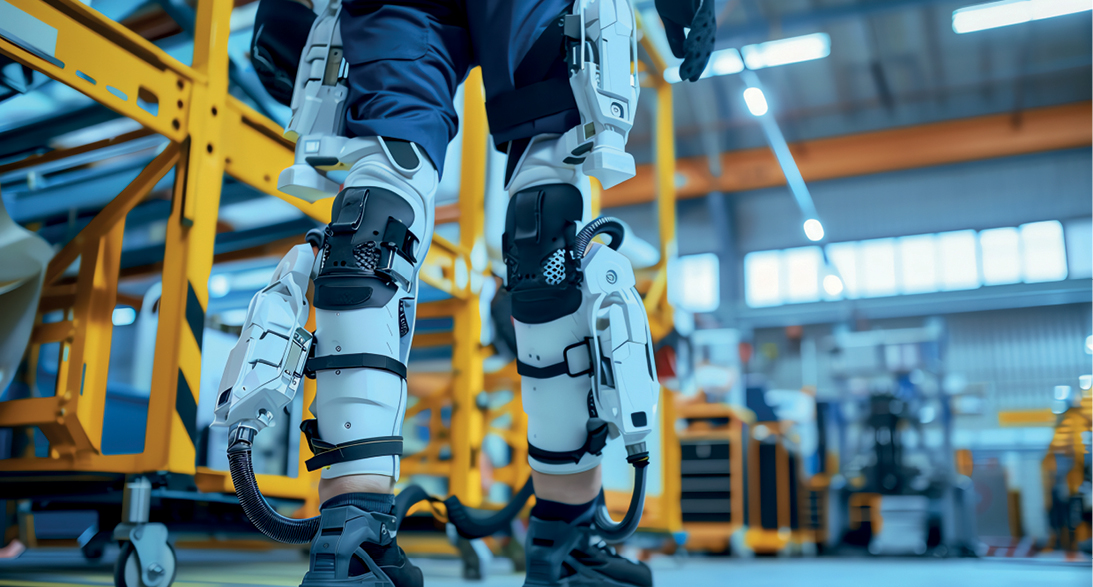
“It is an emerging and increasingly important topic. 4.0 Industry already includes a category of eligible assets dedicated to ergonomics and workplace safety. In industrial laundries, adoption is still limited, but promising technologies are emerging, such as wearable exoskeletons for load handling. Thanks to IoT and declining sensor costs, these solutions are becoming more accessible. Companies are ready to invest, provided there is a clear economic return”.

What is an exoskeleton?

An exoskeleton is a wearable device composed of a structural frame, joints, sensors, and electric or electromechanical actuators. When the operator moves bending the back or arms, sensors detect motion and load; a control unit activates motors that generate torque at the joints and transfer part of the physical effort to the frame. In this way, weight is redistributed across shoulders, pelvis, and legs, significantly reducing fatigue, muscular strain, and the risk of injury especially during repetitive lifting operations.
Let’s conclude with the sworn technical appraisal, a key requirement to access benefits. What is your experience?

“It is a fundamental step, as it certifies that the asset meets all required criteria, particularly interconnection. In my work, I deal both with appraisals and tax disputes, which gives me a clear view of the risks when procedures are not properly followed. The advice is simple: do not treat the appraisal as a mere formality, but as a genuine technical validation tool. A well-executed appraisal protects the company, not only today, but also in the event of future inspections, which are increasingly frequent, both by the Financial Police and the Revenue Agency”. The evolution of industrial laundries demonstrates how even traditional sectors can become highly technological. Between data management, automation, and energy efficiency, the real competitive advantage lies in the ability to integrate innovation with investment strategies, fully leveraging the opportunities offered by industrial policy. •


DETERGO MAGAZINE # APRIL 2026

Share

Read also