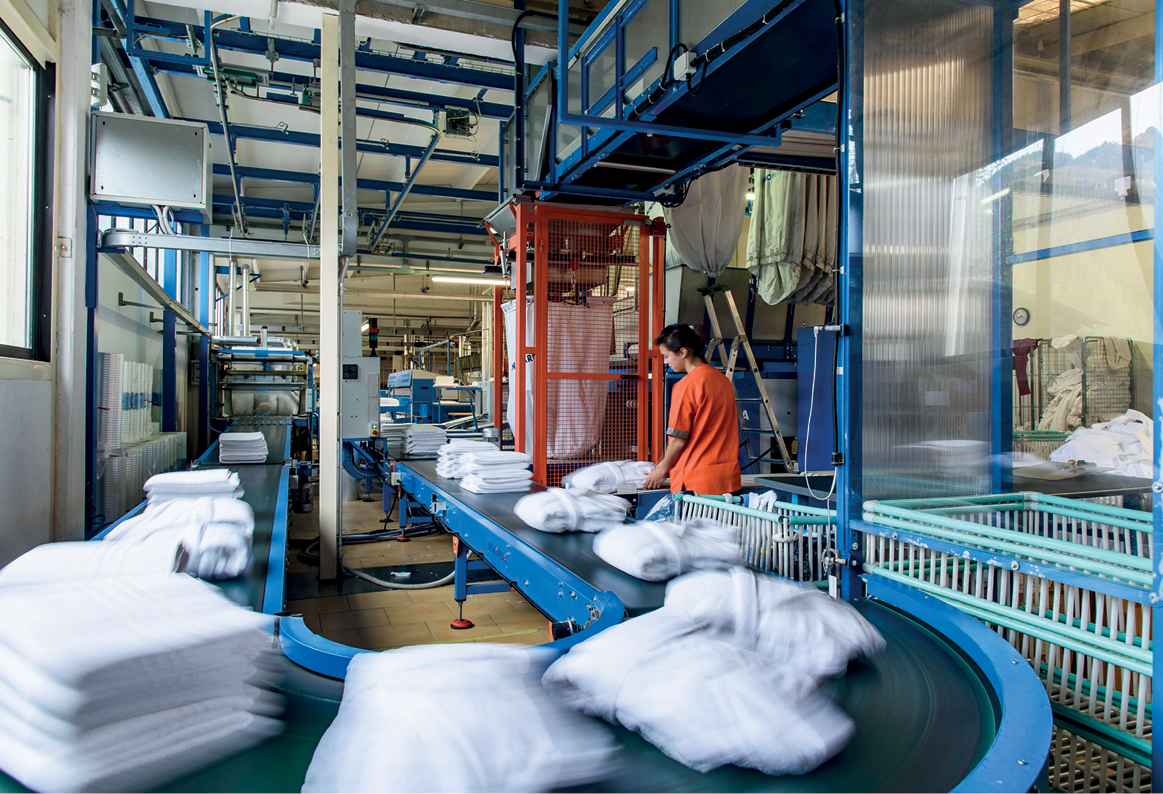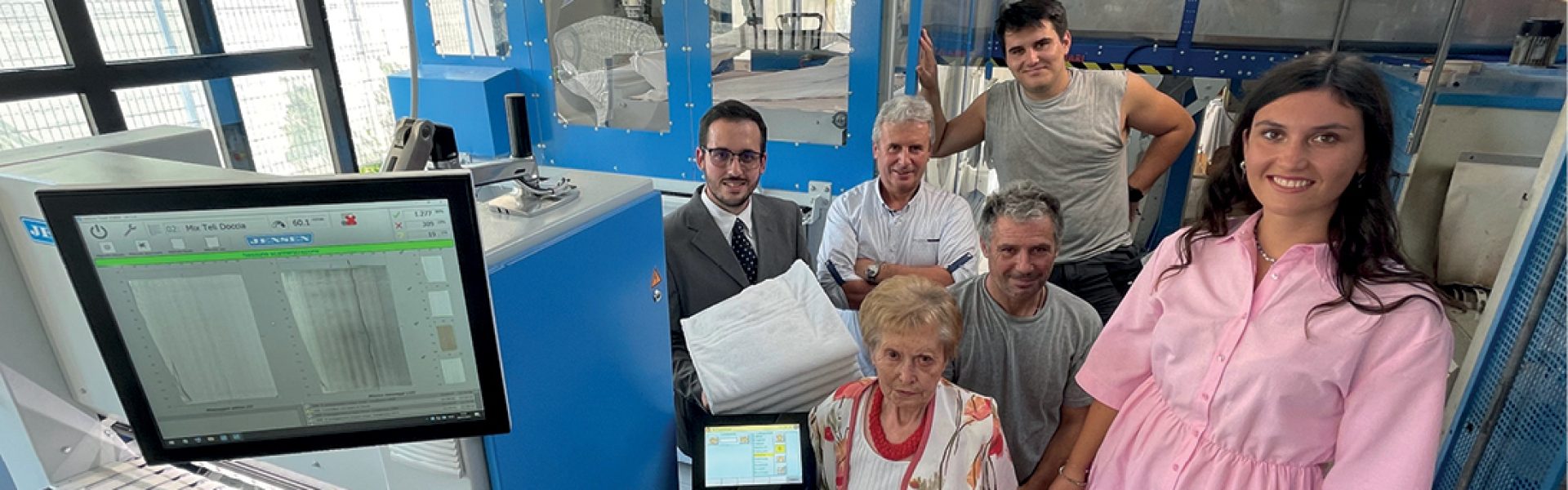
 “We primarily serve the hospitality sector, food & catering, and private healthcare facilities, particularly nursing homes (RSA). Our market is heavily influenced by local tourism, and seasonality directly impacts workloads. During the peak season, production operates at near full capacity, while in the low season, such as the current period, activity drops considerably. At present, we operate three days a week and are not at full production capacity”.
What impact does seasonality have on the company’s industrial structure?
“Seasonality is one of the structural elements of our business model. It affects not only production volumes, but also workforce organization, logistics, plant management, and the use of infrastructure. During the peak season, we reach full production capacity, while in winter our facilities are underused, which is not easy to compensate. This makes a flexible industrial model essential, one that can quickly adapt to fluctuations in demand”.
How do you manage staff in such a variable context?
“We have a stable workforce that guarantees operational continuity throughout the year, complemented by a substantial number of seasonal workers. We make use of the flexibility tools provided by the national collective labor agreement, such as compensating hours between periods of low and high production. From a management perspective, the HR director faces the complex task each year of balancing production needs, economic sustainability, and the availability of human resources”.
“This is a real and growing risk, which is why we have implemented a welfare system aimed at promoting employee well-being and supporting staff retention. Each year we hire seasonal staff, often already trained and loyal, with no guarantee of finding them again the following season. This challenge is amplified by demographic and territorial factors. The Verbano-Cusio-Ossola area has around 146.000 inhabitants and is experiencing significant population decline. While companies generally maintain stability, generational turnover is insufficient to replace retiring workers. Furthermore, the area is not particularly attractive, high housing costs and proximity to Switzerland, where wages are highly competitive, makes it difficult to retain qualified personnel”.

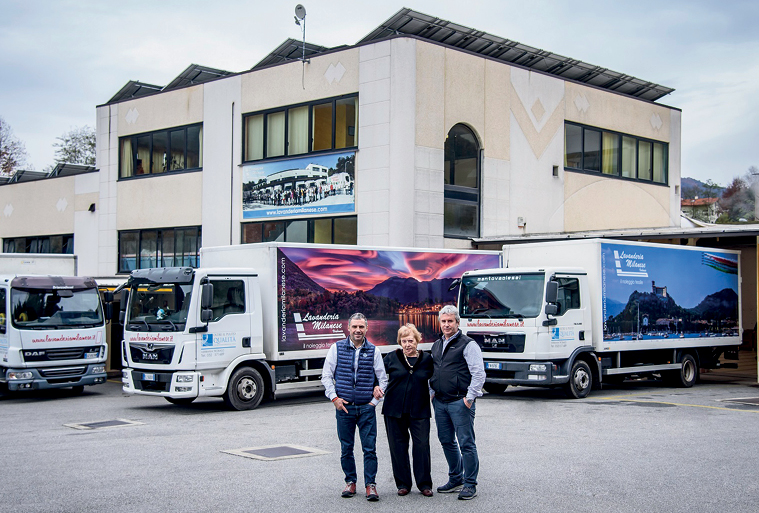
“From 2015 to 2019 we experienced a phase of steady growth, a rare phenomenon in our sector. We were expecting an exceptional 2020, but then Covid arrived. Today our turnover is higher than in the pre-Covid period, but the economic context has changed profoundly. Inflation and rising raw material costs, especially energy, have structurally altered our cost base. Paradoxically, the most difficult years were not those of Covid, but those marked by the surge in energy costs”.

How do workload volumes fluctuate over the year?
“During the high season, we process up to 350 quintals of linen per day, particularly between mid-July and August 20. In the low season, volumes fall to 150–200 quintals on alternate days. This substantial gap represents one of the main challenges in our operational model. In winter, the issue extends beyond staff retention to include linen storage. We maintain a warehouse dedicated exclusively to linen, which involves significant insurance costs that fluctuate with the volumes stored. Recently, we have also had to contend with the introduction of insurance coverage for catastrophic events, adding further economic and regulatory implications that are still not fully defined”.
Could you provide an overview of your pricing model?
“The primary cost driver is labor, including logistics, which represents approximately 35% of turnover. Linen costs follow at around 18%, while energy expenses account for roughly 8% under normal operating conditions. Labor remains the most critical and challenging cost to manage. The company faces competition from firms that engage in contractual dumping and fail to comply with the national collective labor agreement, a form of unfair competition that distorts the market and penalizes businesses operating within regulatory standards”. How much do you invest in machinery and innovation? “In recent years, we have maintained consistent investments, guided by the belief that process automation is essential for ensuring both quality and economic sustainability. These investments cover the entire production chain, from counting and washing to ironing and logistics. While the scale of investment varies year to year, the overall strategic approach remains unchanged. During the COVID-19 period, we scaled back machinery investments but continued investing in linen to fulfill pre-existing orders”.
“Automation has substantially reduced labor costs and streamlined management of a fragmented customer base. However, there is no one-size-fits-all solution: automation must be tailored to the specific market and regional characteristics. In a context like ours, with a highly diverse clientele and pronounced seasonal fluctuations, technology must remain flexible and adaptable”.
Which customer segments contribute most significantly to your overall revenue?
“Approximately 55% of our revenue is generated by the hospitality sector, 20% by catering, and the remaining 25% by nursing homes and healthcare linen. The catering segment has been gradually recovering since the COVID-19 pandemic. Table linens are not only an economic asset but also a cultural symbol of Italian identity. To reinforce this heritage, the company partners with local hospitality schools, offering students a learning pathway that underscores the industry’s significance and the importance of service quality”.
Which primary factors have the potential to negatively impact profitability?
“In addition to geopolitical and economic pressures, such as rising logistics costs and container freight rates, the company’s primary risk is a reduction in volumes, which disproportionately impacts operations by undermining economies of scale. Operational risks, including fires, require investments in insurance coverage and increasingly advanced safety systems. The company also faces illegal practices, such as contractual dumping and improper waste disposal, which distort competition and threaten the sector’s long-term sustainability”.