/ Magazine / Other Articles / EU textile circularity, ETSA calls for sector-specific rules for professional services

EU textile circularity, ETSA calls for sector-specific rules for professional services

edited by
MARZIO NAVA

Brussels accelerates textile sector reform. With the presentation of the third milestone of the preparatory study conducted by the Joint Research Centre (JRC), the European Commission has taken another step toward building a more sustainable, circular, and tightly regulated framework for textile products. Discussions with stakeholders, held on January 15, 16, and 19, focused on key issues, including product durability, recyclability, environmental impact, and the presence of hazardous substances. Digitalization and traceability also featured prominently, with the Digital Product Passport (DPP) emerging as a cornerstone of the sector’s future regulatory architecture. The European Union’s objective is clear: to harmonize rules governing textile waste management across Member States and to make the outcomes of circular economy policies measurable and comparable.

2 NORMATIVA_DETERGO_FEBBRAIO_2026

ETSA’s Message: circularity already exists in textile services


During the debate, the European Textile Services Association (ETSA) took the floor, reaffirming its support for Europe’s sustainability ambitions while delivering a clear message: the professional textile services model should not be equated with household textile use. According to ETSA, service-based B2B systems already achieve high levels of circularity through established industrial processes, including professional laundering, extended product lifespans, repairs, and controlled reuse. The association emphasized that this model operates under logic and life cycles fundamentally different from those of consumer-driven textile flows.
Rethinking labelling and ECODESIGN: a new approach is needed

ETSA also urged that future European labelling rules reflect these differences. The association specifically recommends establishing minimum requirements for physical labels and expanding the use of the Digital Product Passport (DPP) to reduce the costs and administrative burden of re-labelling. On the ECODESIGN front, ETSA’s message is equally clear: regulations should prioritize durability and performance in industrial laundering rather than focusing exclusively on material-based criteria.

I prossimi passi.

The European Commission has circulated a new questionnaire as part of the third phase of the study. ETSA has shared it with its members and is actively contributing to the development of the final report. This initiative extends beyond the textile sector, touching on the broader framework of Europe’s circular economy.

Industry raises alarm over EPR: state-run models may slow circular progress

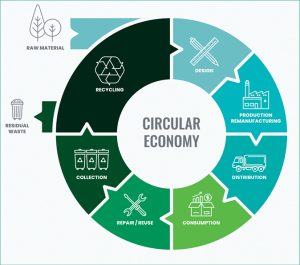
The European Extended Producer Responsibility (EPR) system, a key pillar of the European Union's circular economy, is increasingly a source of tension between institutions and industry. In recent months, several Member States have moved toward state-managed models for Producer Responsibility Organizations (PROs). This decision is raising serious concerns among industry operators, who fear it could weaken the system’s effectiveness and slow down investments.

The crucial question: who should govern EPR?

Industry experts maintain that an effective EPR system should be producer-led, harmonized across Europe, and structured with a clear separation of responsibilities among regulatory authorities, oversight bodies, and operators, as outlined in the Waste Framework Directive. Industry stakeholders warn that state-run models risk blurring these roles, potentially reducing transparency in the management of EPR fees and diminishing incentives to invest in recycling infrastructure and waste management.

Rising costs and reduced innovation

The industry is also raising economic concerns. Fragmented national approaches and unclear governance structures could result in higher operational costs, regulatory uncertainty, and diminished investment appeal. The impact would be especially pronounced for new EPR schemes, such as the planned system for the textile sector, where innovation and scalable solutions are essential to meeting Europe’s sustainability targets.

A strategic move for the EU

For industry operators, the stakes extend beyond technical discussions: they concern Europe’s capacity to balance industrial competitiveness with the ecological transition. According to the sector, a predictable, harmonized, and producer-led EPR framework is essential to support the circular economy and maintain Europe’s leadership in recycling.

DETERGO MAGAZINE # FEBRUARY 2026

Share

Read also