 Internal organization
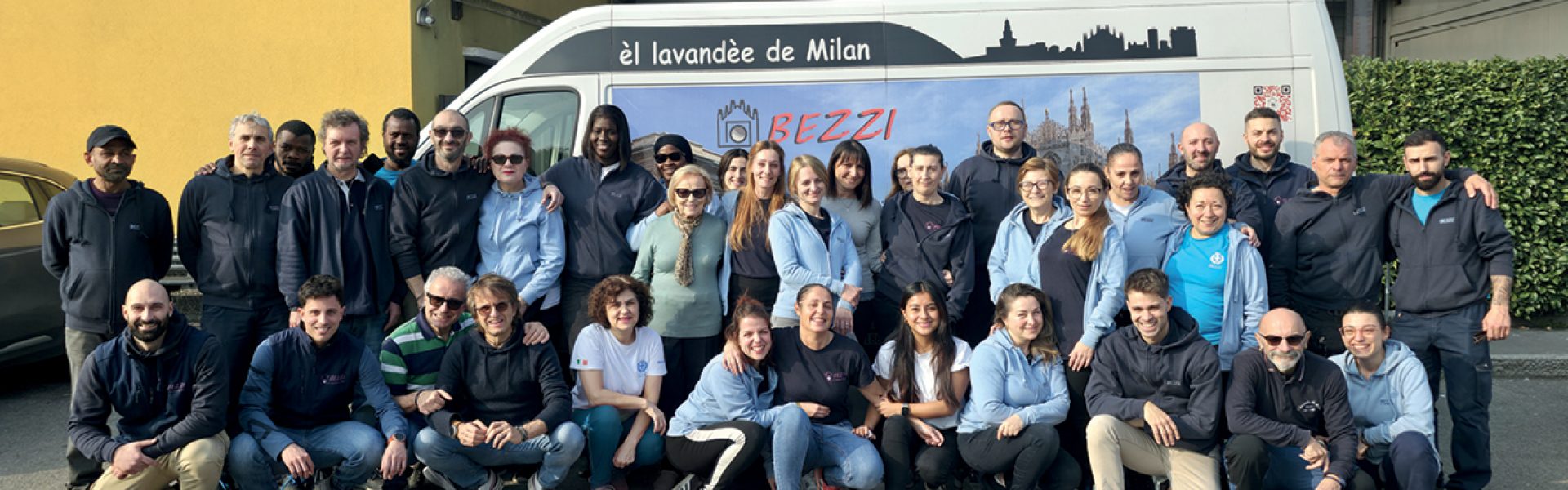
“I’m Marco Bezzi”, says Marco. “He’s Luca Bezzi. We’re brothers and we’ve divided responsibilities equally”. The division is clear. “Marco is at the heart of production”, explains Luca. “I focus more on the commercial side: clients, contracts, and administration”. Marco smiles: “He’s out there building relationships and closing deals. Someone has to bring in the wheat”. Behind the joke lies a solid structure: production and market constantly interact, but with clearly defined responsibilities. “We always consult each other, but each of us knows our scope”.
When did your entrepreneurial journey begin?
“We have a precise starting date: 1887. Our father’s grandfather founded the business. At the time, industrial laundries didn’t exist. They worked for private households, washing clothes in the San Siro canal and drying them in the fields. If it rained, they had to rush to collect everything”. In the 1970s, their father Adriano Bezzi took over, initiating structured growth and a more entrepreneurial approach. “That’s when real expansion began. The economy was booming, and bureaucracy was far less oppressive”. The family name has always remained the brand. “We are known as the laundry of Milan. When everyone was choosing English or American names, we returned to our roots and became èl lavandèe de Milan”.
What role does geographic territory play in shaping your business model?
“Territory matters enormously”, says Luca. “Ninety-nine percent of our work is in Milan”. Specialization has been strategic: the company works almost exclusively with the food service and restaurants sector. There is one exception, a convent that has been a loyal client for over forty years. “It’s our lucky charm. We don’t touch it. Our father always told us: you keep working with the nuns”. Serving central Milan means handling restaurants that process up to 20.000 napkins per month. Large restaurant groups account for about 40% of turnover. “It’s a solid core. But you don’t struggle to keep them, if you treat them well and provide good service, they stay. You have to pamper them”.
How do you balance long-term partnerships with clients versus one-off projects?
The business is built on customized linen rental. “95% of our activity is rental”, explains Luca. “And these are longterm contracts. Each napkin belongs to the client, is logged and personalized, and produced by a dedicated weaver. Personalization creates loyalty. The client bonds with the product itself”.
How did you navigate and experience the challenges of the pandemic period?
“For us, it was a total stop”, recalls Marco. “If restaurants are closed, we are closed. The downtime became an opportunity: maintenance, system upgrades, and process reorganization. After reopening, revenue resumed growth. Post-Covid, we’ve grown steadily”, says Luca. “The expansion has been organic, higher volumes from existing clients, new acquisitions, additional staff, and increased raw material purchasing”.
Can you outline the depreciation timeline for your key industrial machines?
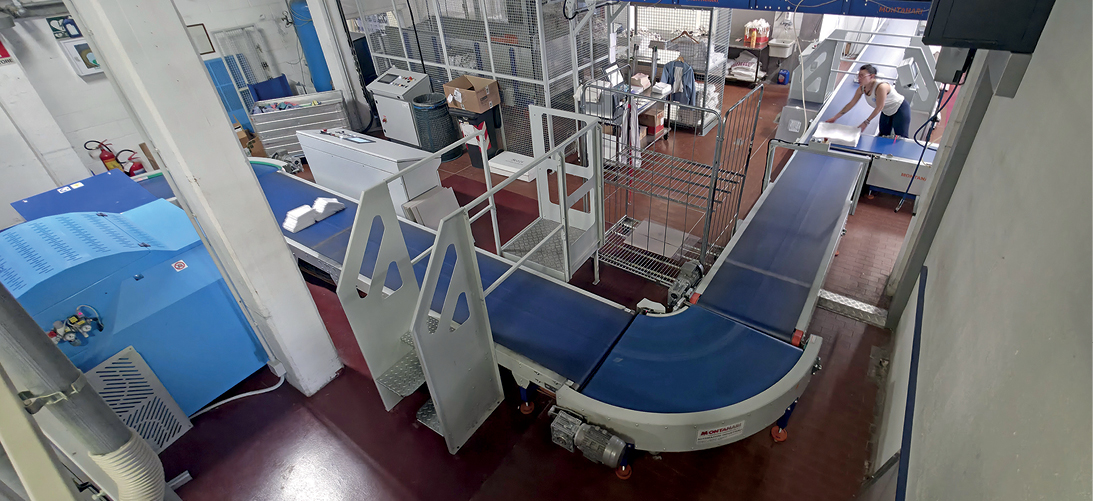
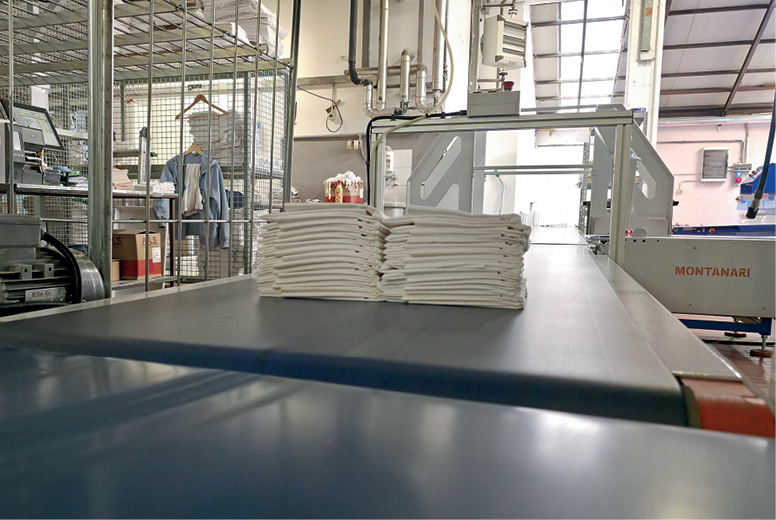
“Average depreciation runs at about five years. Innovation moves fast. After a few years, machines need upgrading”.
Have you quantified the return on your investments?
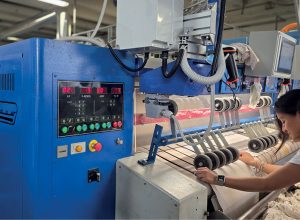
“Productivity gains have reached approximately +20% on certain lines. The new machines are ergonomic and intuitive. You reduce fatigue, improve posture, and integrate new staff more easily. It’s both a productive and human benefit”.
How does your company approach machinery maintenance?
“Maintenance combines internal expertise with remote assistance. Many machines are network-connected. If the internet goes down, the laundry stops. For our father Adriano, the true driving force of the company, the idea that production could stop due to lack of connectivity would have been inconceivable”.
 How many shifts does your company operate, and how are they organized?
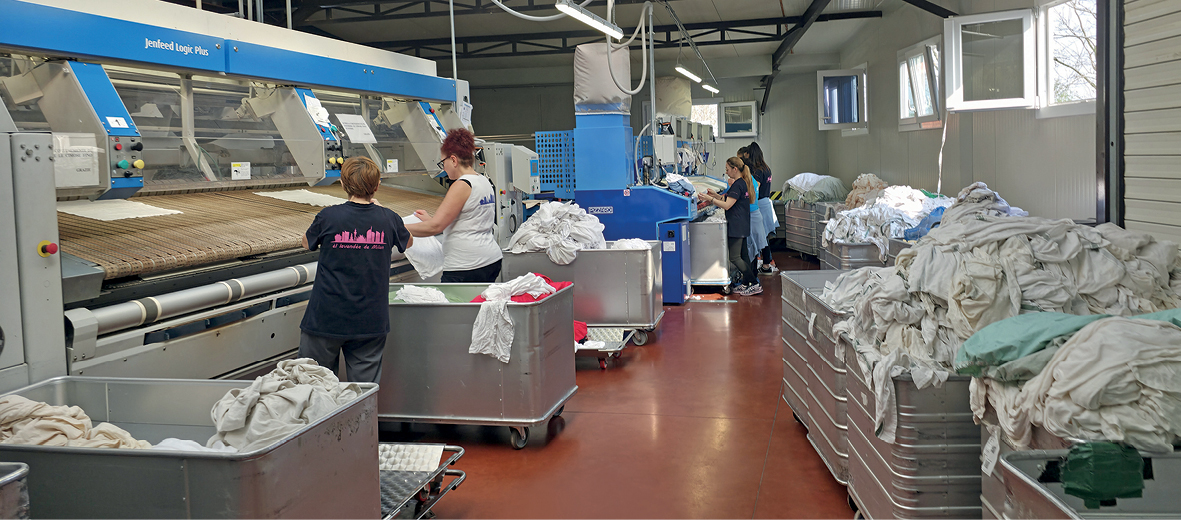
“Lavanderia Bezzi employs around 50 people, all directly hired. Unlike many laundries, it is not heavily affected by seasonality. Workflows remain stable, with minor slowdowns in August and after Christmas, and peaks in spring during major trade fairs such as the Salone del Mobile (Furniture Trade Fair). Operations run on a single shift, from 7 a.m. to 5 p.m., with paid overtime and Saturday morning work when necessary. We decided not to impose unreasonable hours. Everyone must have a life outside work. The family spirit remains central. When we were eight employees, our mother cooked for everyone. Today we are fifty, but the spirit is the same. Meal vouchers, shared moments, birthday cakes, small gestures that build cohesion. We aim for employee loyalty and a genuine sense of belonging”.
For the Winter Olympic Games, where Milan played a central role, how was the workflow organized?
“We experienced a heavy workload, particularly from restaurants in the city center and the Sempione area, but across the city the entire restaurant sector was operating at full capacity”, emphasizes Luca.
Are there any particularly interesting experiences from your work with clients?
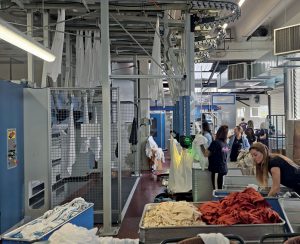
“The most fascinating discoveries come from what arrives to be cleaned, especially in recent years”, explains Marco. “Over time, we’ve found everything in tablecloths, from money and watches to earrings and various models of cell phones. The cutlery isn’t even worth mentioning. On one occasion, we even uncovered an entire culatello wrapped inside a tablecloth. Compared to the past, the pace of work for restaurant staff has increased, and naturally, the care of linens sent to us has changed as well. If items are damaged beyond normal wear due to poor handling, we discard them and charge the client accordingly. We always maintain full transparency”.
Is your company facing challenges in recruiting staff?
Is your company facing challenges in recruiting staff? “There are more complex periods”, explains Luca, “but we’ve never faced structural recruitment issues. They attribute this to a healthy work environment and motivating compensation. The company is open to young talent and considers them an investment in the future. The generational transition is already underway: Marco’s son Stefano is a shareholder, and Daniele, Marco’s son-in-law, serves as director. We are building the transition responsibly, with a long-term vision”.
Balancing tradition and innovation in your laundry operations, would you say this approach has been effective?
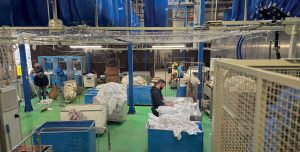
“From laundry hung in the fields of San Siro to automated, network-connected lines, we have crossed more than a century without losing our identity. “We are the laundry of Milan”, the brothers repeat - a definition that blends territorial roots, family pride, and industrial vision. “We are at the gates of Milan, serving the city”, concludes Marco. Because behind every perfectly pressed napkin lies a 139-year history. And a family still writing its next chapter. •
DETERGO MAGAZINE # MARCH 2026